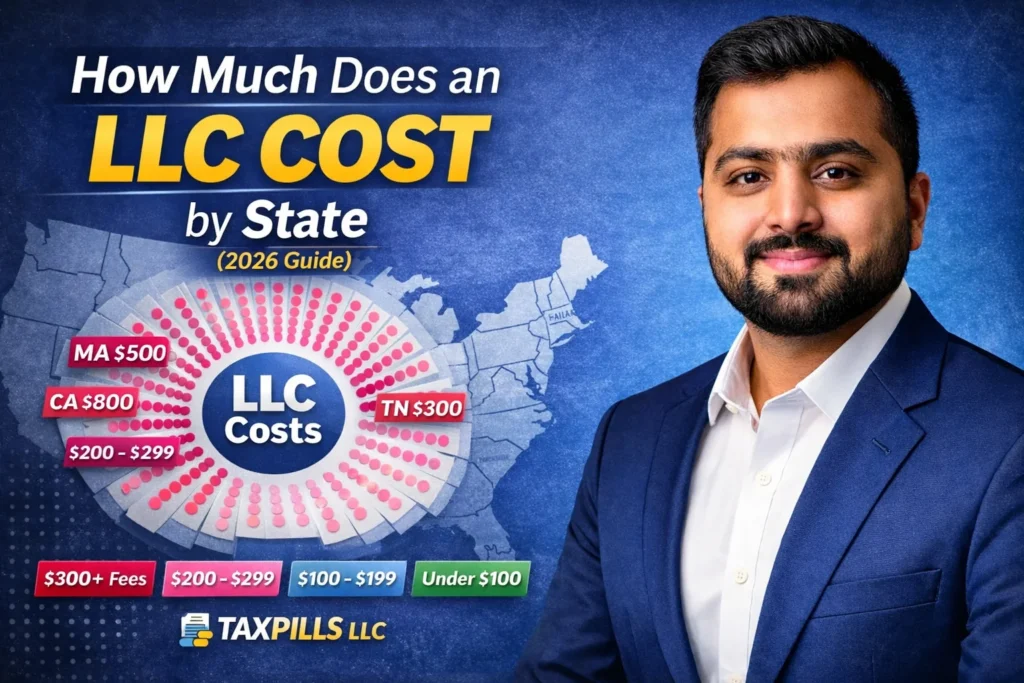
Starting an LLC is one of the smartest moves for protecting your business—but many people only think about the startup cost and forget about ongoing state fees.
If you’re planning to form or already own an LLC, understanding annual fees is critical. These fees vary significantly by state and can directly impact your long-term costs.
In this guide, you’ll learn:
- What LLC filing fees are
- What annual LLC fees mean
- How much each state charges (2026 updated)
- Important warnings most people ignore
- Answers to common questions
What Is the LLC Filing Fee?
The LLC filing fee is a one-time payment you make when registering your business with the state.
Think of it as your startup cost—this is the fee required to legally create your LLC.
Example:
- Texas: $300 (one-time)
- California: $70 (one-time)
Once paid, your LLC is officially formed.
What Is the LLC Annual Fee?
After forming your LLC, most states require you to pay an ongoing yearly (or sometimes every 2 years) fee.
This is often called:
- Annual Report
- Franchise Tax
- Business Privilege Tax
- Biennial Report
- Periodic Report
Even though the names differ, the purpose is the same:
To keep your LLC active and compliant with state laws.
Important Rule:
You must pay this fee even if your business:
- Makes zero income
- Has no activity
- Is temporarily inactive
If you don’t pay:
- Your LLC can be penalized
- Eventually dissolved (closed) by the state
This happens in most states if you miss deadlines.
Average LLC Annual Cost (2026)
As of 2026, the average annual LLC fee in the U.S. is around $91.
However, the actual cost can range from:
- $0 (no annual fee)
to - $800+ per year (California)
Important Warning Before Choosing a State
Many beginners try to save money by forming an LLC in a “cheap” state like Wyoming or Delaware.
This can backfire.
If you operate your business in another state:
- You may need to register as a Foreign LLC
- This means:
- Paying fees in two states
- Filing two reports
- More compliance work
In most cases, the best option is:
Form your LLC in the state where you actually live or operate.
LLC Annual Fees by State (2026)
| State | Formation Cost | Yearly Fee | Filing Timeline | Authority & Filing Requirement |
|---|---|---|---|---|
| Alabama | $200 | Starts from $50 | Within 2.5 months after setup, then every year by April 15 | Alabama Department of Revenue – Business Privilege Tax Filing |
| Alaska | $250 | $100 | Every 2 years, due January 2 | Alaska Division of Corporations – Biennial Report |
| Arizona | $50 | $0 | No yearly filing required | Not applicable |
| Arkansas | $45 | $150 | Due annually on May 1 | Arkansas Secretary of State – Franchise Tax Filing |
| California | $70 | $800 + $20 | Depends on filing cycle | California Franchise Tax Board – Annual Tax + Information Statement |
| Colorado | $50 | $25 | Within a 5-month window around anniversary | Colorado Secretary of State – Periodic Report |
| Connecticut | $120 | $80 | Due yearly by March 31 | Connecticut Secretary of State – Annual Filing |
| Delaware | $110 | $300 | Annual deadline: June 1 | Delaware Division of Corporations – Franchise Tax |
| Florida | $125 | $138.75 | Must be filed each year by May 1 | Florida Department of State – Annual Report |
| Georgia | $110 | $60 | Due every year on April 1 | Georgia Secretary of State – Registration Renewal |
| Hawaii | $50 | $15 | Filed during anniversary quarter | Hawaii Business Registration Division – Annual Report |
| Idaho | $100 | $0 | Annual report required on anniversary | Idaho Secretary of State – Information Report |
| Illinois | $150 | $75 | Due yearly based on formation month | Illinois Secretary of State – Annual Report |
| Indiana | $95 | $30 | Every 2 years (anniversary month) | Indiana Secretary of State – Business Report |
| Iowa | $50 | $30 | Biennial filing, April 1 (odd years) | Iowa Secretary of State – Biennial Filing |
| Kansas | $160 | $50 | Due annually by April 15 | Kansas Secretary of State – Annual Report |
| Kentucky | $40 | $15 | Annual deadline: June 30 | Kentucky Secretary of State – Annual Filing |
| Louisiana | $100 | $35 | Filed every year on anniversary | Louisiana Secretary of State – Annual Report |
| Maine | $175 | $85 | Due each year by June 1 | Maine Secretary of State – Annual Filing |
| Maryland | $100 | $300 | Annual due date: April 15 | Maryland Assessments Dept. – Personal Property Return |
| Massachusetts | $500 | $500 | Filed yearly based on formation date | Massachusetts Secretary – Annual Report |
| Michigan | $50 | $25 | Due annually on February 15 | Michigan LARA – Annual Statement |
| Minnesota | $155 | $0 | Annual report required by Dec 31 | Minnesota Secretary of State – Annual Filing |
| Mississippi | $50 | $0 | Due every year by April 15 | Mississippi Secretary of State – Annual Report |
| Missouri | $50 | $0 | No yearly filing needed | Not required |
| Montana | $35 | $20 | Annual filing due April 15 | Montana Secretary of State – Annual Report |
| Nebraska | $100 | $13 | Biennial (April 1, odd years) | Nebraska Secretary of State – Biennial Report |
| Nevada | $425 | $350 | Filed yearly on anniversary | Nevada Secretary of State – Member List + License |
| New Hampshire | $100 | $100 | Annual due April 1 | New Hampshire Secretary of State – Annual Report |
| New Jersey | $125 | $75 | Filed yearly on anniversary | New Jersey Treasury – Annual Report |
| New Mexico | $50 | $0 | No annual requirement | Not applicable |
| New York | $200 | $9 | Every 2 years on anniversary | New York Department of State – Biennial Statement |
| North Carolina | $125 | $200 | Annual deadline: April 15 | North Carolina Secretary of State – Annual Filing |
| North Dakota | $135 | $50 | Due yearly by November 15 | North Dakota Secretary of State – Annual Report |
| Ohio | $99 | $0 | No annual filing required | Not applicable |
| Oklahoma | $100 | $25 | Annual filing based on anniversary | Oklahoma Secretary of State – Annual Certificate |
| Oregon | $100 | $100 | Due yearly on anniversary | Oregon Secretary of State – Annual Report |
| Pennsylvania | $125 | $7 | Annual deadline: September 30 | Pennsylvania Department of State – Annual Report |
| Rhode Island | $150 | $50 | Filing window: Feb 1 – May 1 | Rhode Island Secretary of State – Annual Report |
| South Carolina | $110 | $0 | Only required if taxed as S-Corp | Conditional filing |
| South Dakota | $150 | $55 | Annual filing on anniversary | South Dakota Secretary of State – Annual Report |
| Tennessee | $300 | Minimum $300 | Due every year on April 1 | Tennessee Secretary of State – Annual Report |
| Texas | $300 | $0 | Annual filing by May 15 | Texas Comptroller – Franchise & Information Report |
| Utah | $59 | $18 | Due yearly on anniversary | Utah Department of Commerce – Annual Renewal |
| Vermont | $155 | $45 | Annual deadline: March 15 | Vermont Secretary of State – Annual Report |
| Virginia | $100 | $50 | Due each year on anniversary | Virginia Corporation Commission – Registration Fee |
| Washington | $200 | $60 | Annual filing based on anniversary | Washington Secretary of State – Annual Report |
| Washington DC | $99 | $300 | Every 2 years, due April 1 | DC Regulatory Authority – Biennial Report |
| West Virginia | $100 | $25 | Annual deadline: July 1 | West Virginia Secretary of State – Annual Filing |
| Wisconsin | $130 | $25 | Filed yearly in anniversary quarter | Wisconsin Secretary of State – Annual Report |
| Wyoming | $100 | Minimum $60 | Annual filing on anniversary | Wyoming Secretary of State – Annual Report |
Should You Hire a Filing Service?
Using a professional LLC filing service doesn’t speed up state approval but ensures:
- Proper paperwork submission
- Compliance with state rules
- Privacy protection (some services use their address to keep yours off public records)
If you want expert help, our team at TaxPills LLC can guide you through the entire process and make sure everything is filed correctly.
We help business owners with:
- LLC formation and registration
- EIN application guidance
- Registered agent setup
- Compliance and filing support
If you’d like help starting your LLC quickly and correctly, you can contact our team directly on WhatsApp.
Chat with us on WhatsApp
Here’s a simplified and easy-to-read breakdown:
States With No Annual Fee
These states either don’t charge or only require a free report:
- Arizona – No fee, no report
- Missouri – No fee, no report
- New Mexico – No fee, no report
- Ohio – No fee, no report
- Texas – $0 (but must file report)
- Idaho – $0 (report required)
- Minnesota – $0 (report required)
- Mississippi – $0 (report required)
Best for low-cost maintenance.
States With Low Fees ($1 – $50)
- Hawaii – $15
- Kentucky – $15
- Utah – $18
- Montana – $20
- Colorado – $25
- Michigan – $25
- Oklahoma – $25
- Wisconsin – $25
- Indiana – $30 (biennial)
- Iowa – $30 (biennial)
- Nebraska – $13 (biennial)
- Pennsylvania – $7
Ideal for budget-conscious entrepreneurs.
States With Medium Fees ($50 – $150)
- Alabama – $50 minimum
- Georgia – $60
- Wyoming – $60 minimum
- Washington – $60
- Vermont – $45
- Kansas – $50
- Virginia – $50
- Arkansas – $150
- Maine – $85
- Oregon – $100
- Alaska – $100
High-Fee States ($150+)
- California – $800 + additional fee
- Delaware – $300
- Nevada – $350
- Maryland – $300
- Tennessee – $300 minimum
- Massachusetts – $500
These states can significantly increase long-term costs.
Filing Frequency
Depending on the state, you may need to file:
- Annually (every year) → Most common
- Biennially (every 2 years) → Example: Indiana, Iowa
- No filing required → Some states
Make sure you track your due date, which is usually:
- Anniversary month
- Fixed date (like April 15 or May 1)
What Happens If You Don’t Pay?
If you ignore your annual fee:
- Late penalties are added
- Your LLC may lose “good standing”
- State can administratively dissolve your LLC
This means your business legally stops existing.
Reinstatement is possible—but it costs more time and money.
Do You Need to Update Your Operating Agreement Every Year?
No.
Your Operating Agreement does not need annual updates unless:
- Ownership changes
- Profit-sharing changes
- Business structure changes
Otherwise, it remains valid.
Benefits of an LLC
Here’s why LLCs are so popular:
Limited liability protection
→ Your personal assets stay protected
Flexible taxation
→ Can choose sole prop, partnership, or S-Corp
Simple management
→ Less paperwork than corporations
Credibility
→ More professional business structure
Step-by-Step: How to Start an LLC
- Choose your state
- Pick a unique business name
- File Articles of Organization
- Appoint a Registered Agent
- Create an Operating Agreement
- Get an EIN (from IRS)
- Open a business bank account
- Stay compliant with annual fees
LLC annual fees are a small but important part of running your business.
While some states offer $0 fees, others charge hundreds of dollars every year. The key is not just choosing the cheapest option—but the right state for your business operations.
Frequently Asked Questions (FAQs)
1. What is the average annual fee for an LLC in the U.S.?
The average annual LLC fee in the United States is around $90–$100 per year. However, this can vary widely depending on the state. Some states charge $0, while others like California require $800 or more annually.
2. Which states have no LLC annual fees?
Several states do not charge an annual LLC fee. These include:
- Arizona
- Missouri
- New Mexico
- Ohio
Some states like Texas, Idaho, and Minnesota don’t charge a fee but still require you to file an annual report.
3. What happens if I don’t pay my LLC annual fee?
If you fail to pay your annual fee:
- Your LLC may face late penalties
- It can lose its good standing status
- The state may dissolve (shut down) your LLC
In most cases, you’ll need to pay extra fees to reinstate your business.
4. Do I have to pay LLC fees even if I make no money?
Yes. LLC annual fees are required regardless of income or activity. Even if your business earns $0 or remains inactive, you must still pay the required fees to keep it active.
5. What is the difference between an LLC filing fee and an annual fee?
- Filing Fee → One-time payment to form your LLC
- Annual Fee → Ongoing payment to maintain your LLC each year
Both are mandatory, but they serve different purposes.
6. Which state has the lowest LLC annual fee?
Pennsylvania currently has one of the lowest annual fees at around $7 per year. Other low-cost states include Kentucky, Hawaii, and Utah.
7. Why is California LLC so expensive?
California charges a mandatory $800 annual franchise tax, regardless of income. This is one of the highest LLC fees in the U.S. and is required even if your business is not active.
8. Can I form an LLC in a cheaper state to save money?
You can, but it’s often not recommended.
If you operate in a different state, you may need to:
- Register as a Foreign LLC
- Pay fees in two states
- File additional reports
This can actually increase your total cost.
9. How often do I need to pay LLC annual fees?
It depends on the state:
- Most states → Every year (annually)
- Some states → Every 2 years (biennially)
- A few states → No ongoing fee required
Always check your state’s deadline.
10. Is an LLC worth it despite annual fees?
Yes. An LLC provides:
- Limited liability protection
- Tax flexibility
- Business credibility
For most entrepreneurs, the benefits outweigh the relatively small annual costs.
11. Do I need to file an annual report every year?
In most states, yes. Even if there is no fee, you may still need to submit an annual or informational report to keep your LLC active.
12. Can LLC annual fees be tax deductible?
In many cases, yes. LLC fees are generally considered business expenses and may be deductible on your tax return. However, the exact treatment depends on your tax situation.
13. What is the penalty for late LLC annual filing?
Penalties vary by state but may include:
- Late fees
- Interest charges
- Administrative dissolution
Some states charge significant penalties if you miss deadlines.
14. Which states are best for low-cost LLC maintenance?
States with low ongoing costs include:
- Wyoming
- Kentucky
- Utah
- Michigan
- Colorado
However, the best state is usually where you live or operate your business.
15. Do I need to update my LLC every year?
You don’t need to update your LLC structure annually, but you must:
- File required reports
- Pay annual fees
- Keep your business information up to date